

Many people know they should have a will, but assume they have plenty of time to create one. Life has a way of changing those plans.
When a Wisconsin resident passes away without a will, their family may face legal and financial complications that could have been avoided with proper planning. Instead of following personal wishes, Wisconsin law determines how certain assets are distributed and who will manage the estate.
For many families, the real cost is not just financial. It is the uncertainty, delays, and added burden placed on loved ones during an already difficult time.
What Decisions Does Wisconsin Make If You Don’t Have a Will?
A person who dies without a valid will is considered to have died “intestate.”
In that situation, Wisconsin’s intestate succession laws determine who inherits property that does not pass automatically through beneficiary designations, joint ownership arrangements, or other estate planning tools.
The outcome depends on several factors, including:
- Whether you are married
- Whether you have children
- Whether there are children from prior relationships
- Whether other close relatives survive you
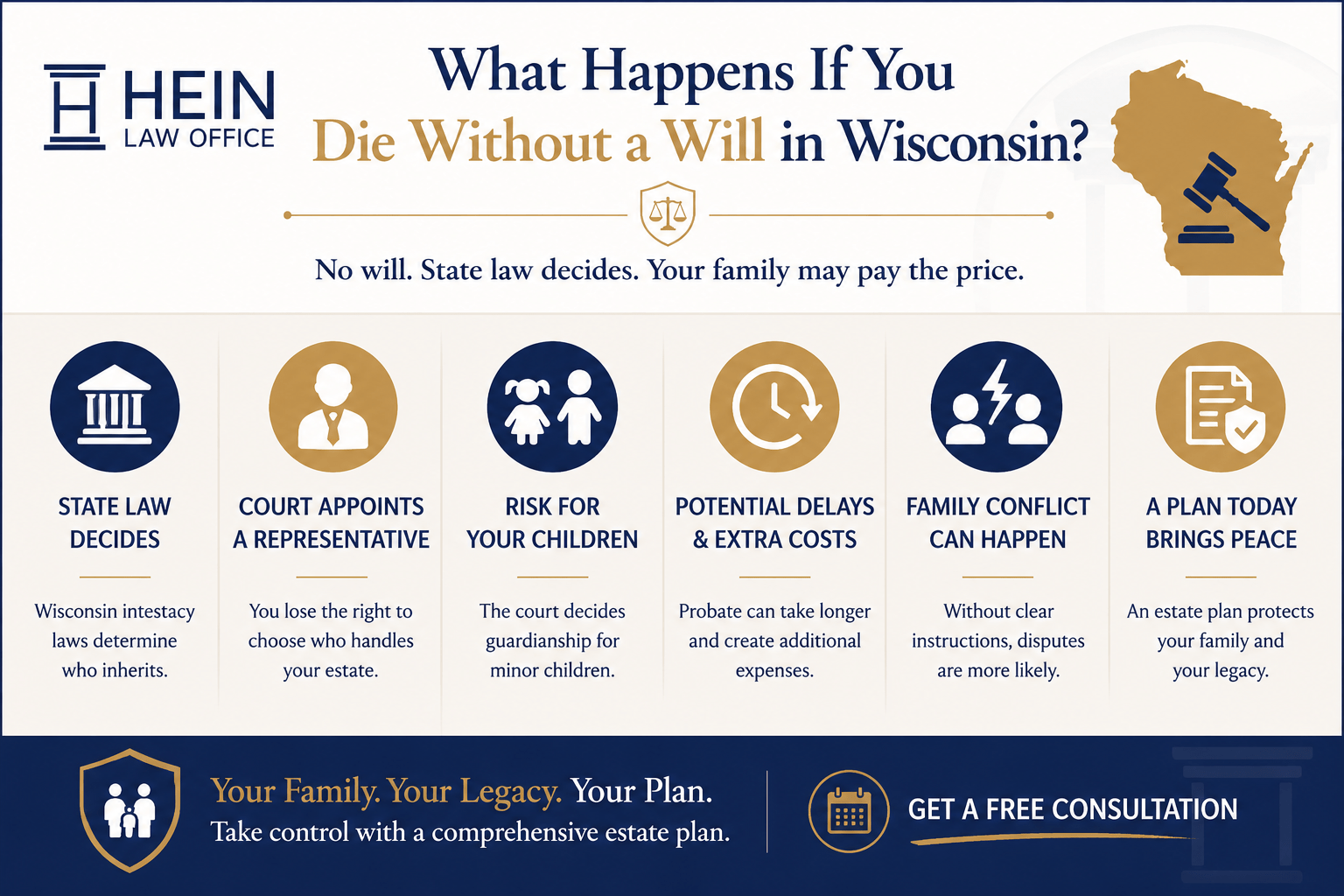
While Wisconsin law provides a framework for distributing assets, it may not reflect your personal wishes. A will allows you—not the state—to decide who should receive your property and who should be responsible for administering your estate.
Who Will Handle Your Estate?
One of the most overlooked aspects of estate planning is selecting the person who will be responsible for settling your affairs.
With a will, you can nominate a personal representative to carry out your instructions, gather assets, address outstanding obligations, and distribute property according to your wishes.
Without a will, the probate court must appoint someone to serve in that role. While the court follows Wisconsin law when making that appointment, you lose the opportunity to make that decision yourself.
For families with complex assets, family businesses, or multiple beneficiaries, choosing the right person can make a meaningful difference in how smoothly the administration process unfolds.
What Happens If You Have Minor Children?
For parents, this may be one of the most important reasons to create a will.
A will allows you to nominate the person you would like to serve as guardian for your minor children if both parents are unable to care for them.
Without written instructions, the court may need to determine who should assume that responsibility. While the court’s goal is always to act in the child’s best interests, many parents prefer to provide clear guidance rather than leave those decisions unresolved.
Creating a will can provide valuable direction and help reduce uncertainty for family members during a difficult transition.
Can a Lack of Planning Create Family Conflict?
Even families with strong relationships can encounter challenges when a loved one’s wishes were never documented.
Questions often arise regarding:
- Personal belongings with sentimental value
- Real estate
- Family heirlooms
- Financial accounts
- Responsibility for handling estate matters
When expectations differ, misunderstandings can occur. A properly prepared estate plan helps create clarity and can reduce the likelihood of disputes among surviving family members.
Many people view estate planning as a way to distribute assets. In reality, it is often just as important for preserving family harmony.
Why Waiting Often Costs More Than Planning Ahead
One of the most common misconceptions is that estate planning is only necessary for wealthy individuals.
In reality, nearly everyone leaves behind decisions that must be addressed.
The cost of waiting is not always measured in dollars. It can include:
- Additional stress for loved ones
- Delays in settling affairs
- Uncertainty regarding personal wishes
- Increased administrative burdens on family members
For many Wisconsin families, creating an estate plan is less about preparing for death and more about making life easier for the people they care about most.
Is a Will Enough?
A will is often an important starting point, but it may not be the only planning tool worth considering.
Depending on your goals, a comprehensive estate plan may also include:
- Financial powers of attorney
- Health care directives
- Beneficiary designation reviews
- Trust planning
- Asset protection strategies
For some families, trusts may provide additional benefits related to privacy, administration, long-term planning, or protecting assets for future generations.
The right approach depends on your circumstances, family dynamics, and long-term objectives.
How a Janesville Estate Planning Attorney Can Help
Estate planning is not simply about deciding who receives your property. It is about creating a plan that reflects your wishes while helping your family navigate the future with greater clarity and confidence.
Working with a Janesville estate planning attorney allows you to evaluate your current situation, identify potential gaps in your planning, and determine which legal tools may be appropriate for your goals.
The earlier planning begins, the more options are typically available.
Key Takeaways
- If you die without a will in Wisconsin, state law determines how certain assets are distributed.
- Without a will, you lose the opportunity to choose who will administer your estate.
- Parents can use a will to nominate guardians for minor children.
- Estate planning can help reduce confusion, delays, and family disputes.
- Working with a Janesville estate planning attorney can help ensure your plan reflects your goals and family circumstances.
Taking the Next Step
Many families put off estate planning because they believe they have more time or assume their loved ones will be able to figure things out later. Unfortunately, unexpected events happen every day.
Creating a thoughtful estate plan today can help provide clarity, preserve family relationships, and reduce unnecessary burdens for those you care about most.
At Hein Law Office, LLC, we help Wisconsin families evaluate their options and create estate plans tailored to their unique goals and circumstances. Whether you are creating your first will or exploring more advanced planning strategies, now is often the best time to begin the conversation. Get a free consultation to learn more.
References: Daily Journal (May 5, 2025) “Intestate succession: The risks and complications of dying without a will” and Investopedia (April 11, 2025) “What’s the Worst Thing That Can Happen If You Die Without a Will?”